Educational Freedom in Palestine
Virtual Campus Tour
Organize an event on your campus where your community can hear directly from Palestinian students, scholars, and staff about the conditions they are facing and get involved in initiatives that support and sustain Palestinian education.
About
Learn about the Educational Freedom in Palestine Virtual Campus Tour.
Toolkit
A hands-on guide for planning your event, including suggestions, templates, and resources.
Organize
Submit plans for your event, speaker requests, and questions to organizers.

Contact
Get in touch directly with organizers for support in planning and finalizing your event.
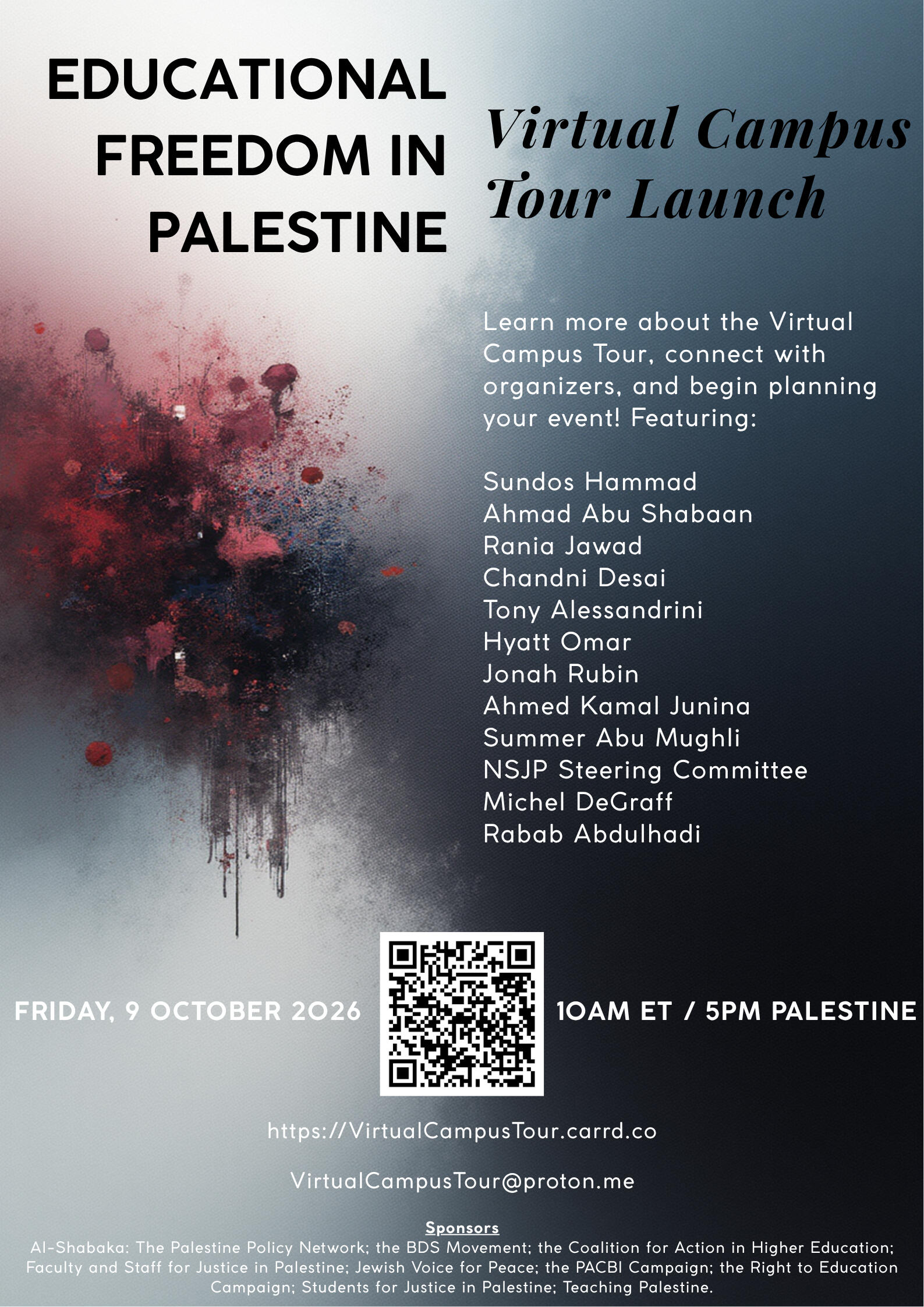
Please join us for the launch of the Virtual Campus Tour on Friday 9 October, 10am ET / 5pm Palestine. Register here.
About
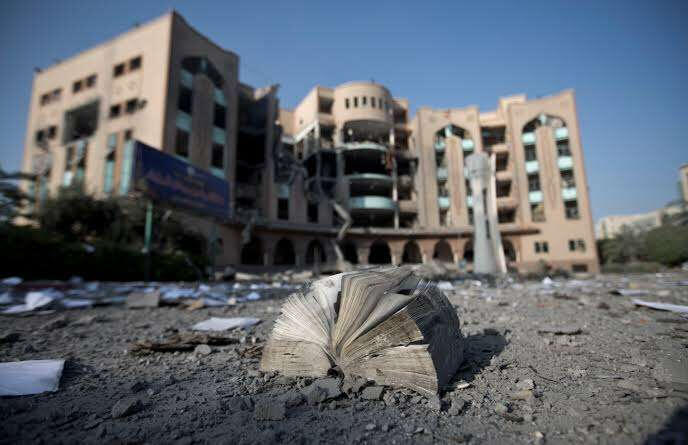
The Islamic University of Gaza, 2014
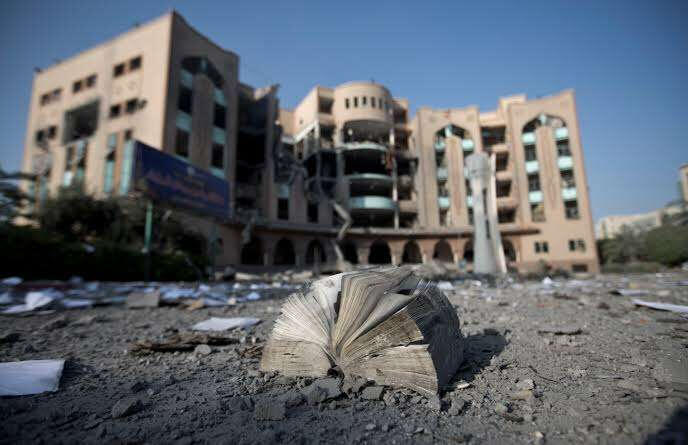
Palestinian higher education has been under sustained and systematic attack for decades, stretching back to the Palestinian Nakba of 1948. What is it about education and those who seek to attain it that seem so dangerous to the colonial mind that it seeks to obliterate them?
The Educational Freedom in Palestine Virtual Campus Tour aims to create connections and build relationships between campus communities in Palestine and North America. At a time of scholasticide and epistemicide across the Palestinian higher education sector–and of continued resilience and sumud among Palestinians and their institutions–it is of the utmost importance for the higher education community in the United States and Canada to hear directly from peers and colleagues on the ground in Palestine. This project helps facilitate “virtual campus events” where campuses can:
Learn about higher education conditions in Palestine, including the daily restrictions, closures, assaults, killings, and institutional racism that Palestinians face as they strive to educate themselves and pursue their scholarly work.
Support Palestinian students, scholars, staff, and institutions as they continue their academic work despite such dire conditions.
Center, amplify, and uplift the voices of Palestinian peers and colleagues as they seek to rebuild their educational institutions autonomously and according to their wishes and needs.
Get involved in initiatives that support and sustain Palestinian higher education.
Reground campus communities in North America in solidarity with Palestinian peers and colleagues and in collective action against institutional complicity.
By simply connecting, listening, talking, and engaging, campuses can help peers and colleagues in Palestine feel less isolated. At the same time, events can provide new collective grounding for campus movements in North America as they continue–through the immense repression they are facing–to express and enact solidarity with Palestine.The Educational Freedom in Palestine Virtual Campus Tour is guided by an intersectional ethos. By helping connect Palestinian and North American students, scholars, and staff, this project creates an intersectional educational terrain where the ideal of learning with one another is put into practice across the borders that artificially separate us. As they host events, we urge campus communities to consider:
How are their own institutions implicated in the conditions their peers and colleagues in Palestine face?
How do their institutions replicate these conditions as their Indigenous communities, Black and other communities of color, trans and queer communities, communities of dissent, and communities of solidarity are increasingly targeted, surveilled, silenced, and expunged in North American higher education?
How might they guide their institutions towards ethical responses to these conditions in their curricula, scholarly emphases, programming, investments, procurements, and other initiatives?
With Palestine understood as a crucible for addressing these issues, this project creates an intersectional educational space from which a new community of solidarity, engagement, and collective action emerges.What might a “virtual campus event” look like? While Palestine-based participants will appear virtually, events should be hosted in person whenever possible to encourage community-building on campuses. Virtual Campus Tour facilitators will work with campus partners–departments, campus groups (such as AAUP, FSJP, SJP, JVP, Sunrise Movement, YDSA, etc. chapters), and individual community members–on their events. We will help you design your event on the basis of the needs and interests of your campus and put you in touch with relevant Palestine-based participants. Events might comprise a presentation, a panel, a roundtable, a townhall, a screening and discussion, a cultural performance, or otherwise.We invite departments, campus groups, and individual community members to check out the organizing toolkit, plan their event, and get in touch to discuss their event.
Toolkit
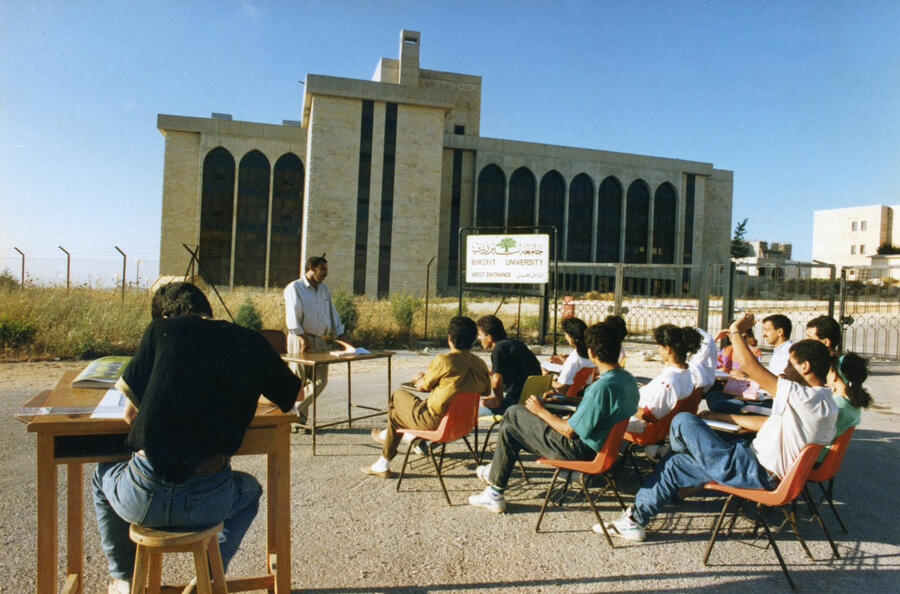
Birzeit University, 1987
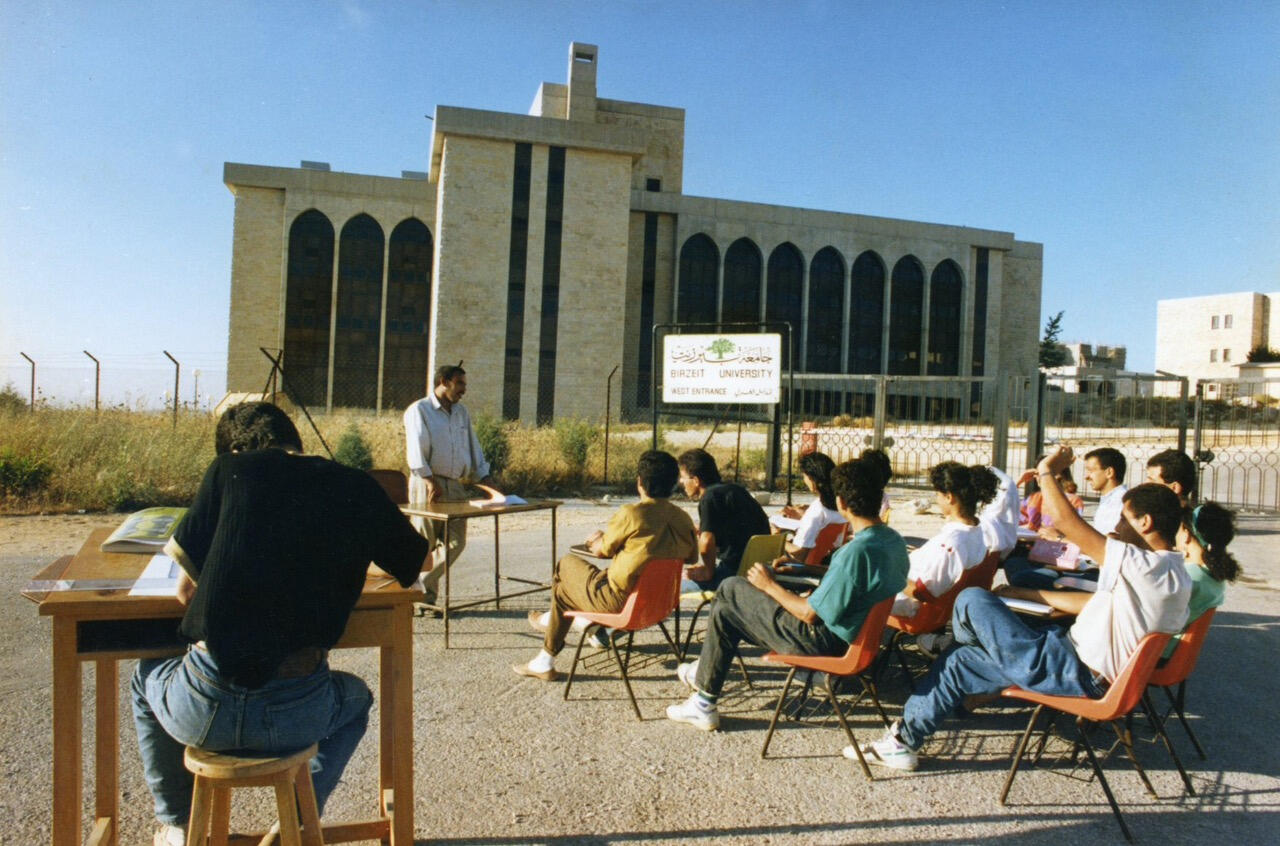
Through decades of repression, campus closures, destruction of physical infrastructure, and targeted assassinations and kidnappings, Palestinian students and educators have always found innovative ways to exercise their right to learn and to teach.
The Virtual Campus Tour is a flexible, highly adaptable format. It is intended to raise the profile of Palestine organizing on your campuses, foster solidarity with people on the ground in Palestine, and advance your local campaigns.We are available to help you customize and adopt the Virtual Campus Tour to your particular campus context. This toolkit is designed to help you get started envisioning and planning a Virtual Campus Tour event on your campus.
Step 1: Panel Format
The most common format for a Virtual Campus Tour event will consist of a panel of speakers offering brief talks, followed by a conversation or Q&A. Panels can be as short as 1 hour but most robust panels will require at least 2 hours.To help focus the roundtable discussion, we recommend that you choose a specific focus on the panel. Possible Virtual Campus Tour topics include (but are not limited to): current conditions of higher education in Palestine; the history of Palestinian higher education; higher education under conditions of occupation, apartheid, and genocide; the complicity of Israeli and international institutions in scholasticide and epistemicide; the complicity of your own institution in scholasticide and epistemicide; supporting the rebuilding of Palestinian higher education institutions; higher education as a repository of Palestinian experience, history, culture, and life; and higher education as a locus of Palestinian resistanceAt some places, it may make sense to screen a short film or have a brief cultural production (eg. oud, dabka, tatreez) prior to such a panel.
A Virtual Campus Tour event should include at least one (and preferably several) student, scholar, or staff member from an educational institution in 1948 Palestine, eastern Palestine, or Gaza. We maintain a database of appropriate speakers and would be delighted to facilitate connections with your campus.
Ideally, a Virtual Campus Tour event will make connections with local Palestine organizing on your campus and in your community. To that end, we encourage at least one panelist who is active on campus and community campaigns, one who can offer opportunities for those in attendance to get active on campaigns that will make a material impact in support of Palestinian lives and education. This might be a member of your local SJP, FSJP, JVP, or other local Palestine solidarity organization.
Given the likely presence of opposition at an event like this, we encourage you to include a skilled moderator. If needed, the Virtual Campus Tour can supply a facilitator for your panel.
As you plan your Virtual Campus Tour event, you may also wish to include on your panel:
A Virtual Campus Tour event can also draw connections with local organizing campaigns beyond Palestine solidarity work. Organizers may wish to consider inviting campus or community organizers working on related social justice organizing, such as: immigrant justice, environmental justice, anti-surveillance organizing, prison abolition or more to participate in the panel.
A Virtual Campus Tour event may wish to include one or more scholars or advocates who can situate local organizing within national and international contexts. We have a number of people who could serve in this capacity.
A note on venue and funding: We are trying to build institutional power that we can leverage towards material wins towards Palestinian liberation. To that end, whenever possible, we want to make universities devote resources to hearing from and supporting Palestinians. We urge you to thoroughly explore the possibility of hosting a Virtual Campus Tour on campus, securing funding from your university, and inviting those with power to hear directly from people who their institution’s policies harm.We also understand that, under current conditions of repression, this may not be possible on every campus. If you are not able to hold your event on campus or secure campus funding, a Virtual Campus Tour event can also be held at a local off-campus bookstore, a progressive church, or another community institution.
Step 2: Actions Your Audience Can Take
A Virtual Campus Tour event should be action-oriented. The purpose of the Virtual Campus Tour is not only to educate, but also to activate those in attendance to support local, national, and international campaigns.
If there is a local campus or community campaign (eg. divestment campaigns, contract exclusion campaigns, boycotts, legislative fights, etc.) that people can support, you should use these events as an opportunity to further those campaigns.
If you are including organizers from allied social justice movements on your campus or in your community, you should likewise lift up their local campaigns.
In addition to any local campaigns, you may wish to promote the following national and international campaigns. We can supply a summary and/or panelists to talk about why these inter/national actions are important, effective, and impactful:
In addition to supporting local organizing campaigns, we urge you to use this as an opportunity to engage in solidarity fundraising. If your campus has funding for speakers, all members of the Virtual Campus Tour urge you to direct it towards supporting:
Step 3: Continue the Conversation
Make sure you have concrete ways for those in the audience to continue receiving information and getting involved in Palestine and other social justice causes. Host a meal after the event to continue the conversations. Have a sign-up sheet and QR code for folks to follow you. Have info about your next open general meeting.
Example Template
A possible template for a Virtual Campus Tour event includes:
One Virtual Campus Tour facilitator.
Two or three members of your campus community representing distinct groups and constituencies.
At least one student from an educational institution in 1948 Palestine, eastern Palestine, or Gaza.
At least one scholar or staff member from an educational institution in 1948 Palestine, eastern Palestine, or Gaza.
One international Palestine scholar or activist.
Organize
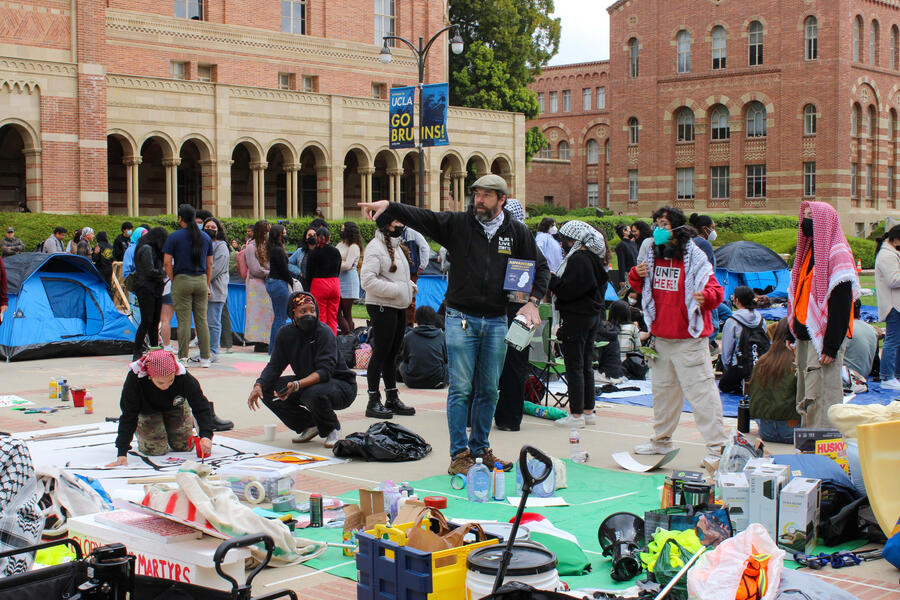
University of California Los Angeles, 2024
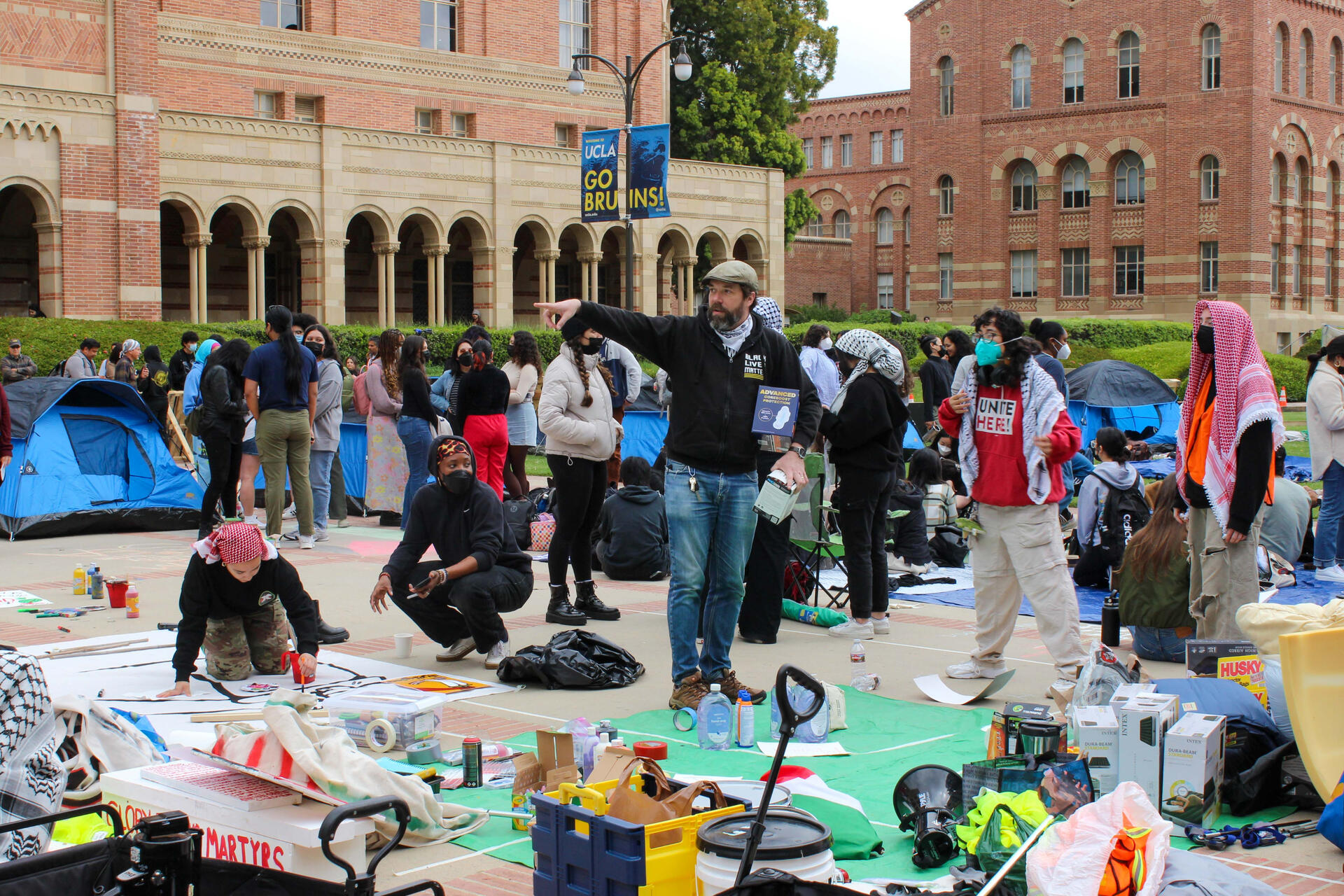
The Palestine solidarity encampments of 2024 continued the proud tradition of anti-war, anti-racism, anti-Apartheid, and anti-genocide activism on campuses around the United States and around the world.
Once you have planned your event, please complete the following form to get in touch with Virtual Campus Tour organizers:
Contact
Ghassan Kanafani

"The Palestinian cause is not a cause for Palestinians only, but a cause for every revolutionary, wherever he is, as a cause of the exploited and oppressed masses in our era."
If you have any additional questions, you can get in touch with Virtual Campus Tour organizers at the following address: